

Fen – Interview met The Watcher (Frank Allain) (vocals, guitars)
The Watcher: “We are always writing. New material is the lifeblood of any band in my view, if the creative well dries up and you’re not feeling the drive to create more music, the band is over”
De terugkeer naar de intensiteit van (epische) black metal doen ze met gracieuze flair. Dat schreven we al eerder over Fen, het trio dat al zeven albums weet te boeien met atmosferische black metal. Album nummer acht staat klaar om los te laten op de mensheid. ‘Elemental Part One: Mourning Earth’ is een verheven werk dat uitnodigt om drie kwartier weg te zinken in ravissante black metal versus weemoedige sereniteit van Fen. Mastermind The Watcher was zo vriendelijk om alles uitgebreid uit de doeken te doen.
Vera Matthijssens Ι 17 augustus 2026
Hello Frank, how are you doing? I hope you don’t suffer from the heat-wave too much!
Thanks Vera, it has certainly been warm recently! We had a four hour rehearsal weekend just past and even though there was aircon in the room, it still made for a rather sweaty experience. These aren’t really the ideal conditions for trying to channel the spirit of autumnal bleakness and cold desolation but not much one can really do about that sadly. At least it made the post-rehearsal craft ale afterwards feel even more deserved…
Let us start with the essence of the band. Fen is inspired by The Fens, the place where you grew up. Can you tell us about the impact, the characteristics of that area and the way it inspires you…
So our family moved out to the middle of the fens when I was about ten years old. We moved there from Devon in the south-west of England which is quite a green, hilly, rolling area – very much ‘traditional’ English ‘green-and-pleasant land’ sort of stuff. So to be moved to the other side of the country to an area that until the mid 19th Century had basically been underwater was something of a change. As you can imagine for what is basically drained swampland, it is a very flat area – very similar to the Flanders areas of Northern Belgium – and it is sparsely populated. Long, straight roads cut across seemingly endless fields of peat with the occasional village or hamlet popping up here and there. There’s the odd patch of woodland but really, sparseness and bleakness are the defining characteristics. The skies are huge, birds circle lazily and languid waterways still drift across the landscape.
It’s quite unique – the sense of quiet and space can almost be overwhelming at times but there is also a sense of history in those black soils. One can feel the breath of ancient spirits whispering on the wind, of long-forgotten tales buried deep in the ancient earth and lost to the passage of time. Living amongst this landscape whilst simultaneously discovering extreme metal, learning the guitar and enduring the misery of adolescence at a pretty grim school really was the catalyst for a lot of the building-blocks that became Fen.
Quite early on in my musical journey – probably around 1996 or thereabouts – I realised that I wanted to create my own atmospheric black metal, balancing aggression with a sense of despair. I think even back then, without realising it, the landscape was influencing me subconsciously, seeming to reflect the inner landscapes of disaffection and isolation I was feeling at the time. These early efforts were of course incredibly primitive – buzzing guitars, keyboard drums and cheap synths on a murky cassette four track. Nevertheless, what Fen is now really grew from there – I moved to London to study in my late teens and started immersing myself in the London metal scene, joining bands and immersing myself in the city’s extreme metal culture. Despite this, I would frequently return to the fens and would still continue to write/record music by myself in this more atmospheric style. Indeed, I did actually put together a few pieces under the auspice of ‘Fenn’ on the trusty 4 track back in 1999-2000 so that could perhaps be considered the genesis of this whole thing. Of course, it really became fully crystalised in late 2005 when the decision was made to start the ‘Fen’ project (as that’s really what it was back then) as a ‘full band’ proposition – and it has just all grown from there. At the heart of it all however is the special atmosphere of the area where all of these notions took shape – the quiet, reflective sadness; the sparseness; the sense of cathartic solitude when setting out to wander amongst the emptiness. It’s a special place and certainly, in the last few years, we have drilled back into these core notions as a source of renewed inspiration. It continues to give.
It has been three years since the release of ‘Monuments Of Absence’ and that album showed a return to harsher black metal-ish material. Can we say that the new album follows that path too, but more and more in a perfected developing way?
‘Monuments…’ was for sure a more traditionally black metal album. It was still definitively ‘Fen’, it is important for us that we do not lose our sense of definition completely, however we certainly amplified the more aggressive areas of our sound. I don’t feel this is at the expense of our sense of ambience or emotion however, there are definitely plenty of expansive elements on that record. But yes, fuelled by the power of our new drummer (as he was at that time) JG and a sense of enveloping miserable darkness consuming the world, intensity and aggression were ramped up there.
With that in mind, we were (and always are when we work on a new album) conscious that we did not want to repeat ourselves on ‘Mourning Earth’. The darkness is still there – the world is certainly not a better place than when we wrote ‘Monuments…’ – however, we wanted to focus more on a sense of despairing reflection and weary surrender. Musically, we needed to explore space and weight – slowing things down a touch, allowing riffs, passages and themes to breathe, to repeat and expand. We definitely wanted to inject a sense of the organic into ‘Mourning Earth’ – jammed and improvised sections being a focus, recording live and seeing where the songs travel. It was a nice way to reconnect with how we used to work in the very early days of the band, the three of us playing in harmony, that indefinable ‘x-factor’ sense of connection and exploring where the music needs to go. I’d forgotten how exciting it is to work that way and it certainly has lent a palpable sense of energy to the album.
I know you are not an abundantly touring band, but did you manage to reach the folks after the previous release by doing some gigs?
We definitely did our best to. In fairness, we all have full-time jobs and various responsibilities that middle-aged life brings so going out on extensive tours isn’t something we can really indulge in at this stage. Nevertheless, we certainly managed to do a few shows to support ‘Monuments…’. We played quite a few festival slots – Alcatraz, Midgarsblot, Damnation and several others – as well as a small tour in the UK with Harakiri for the Sky. Playing live is important for us – it is challenging as there are only three of us looking to replicate material that can be quite layered in the studio, but that is also part of the essence of our existence. Can we get this stuff to work live, stripped down to the core components of the band? Can we deliver the essence of Fen without dozens of tracks pumping out of a laptop alongside us? We’re determined to play ‘real’ music, to keep it fully live and ensure that each performance is unique, that the immediacy and visceral nature of the live performance is there each time we play (as opposed to some guys stood still onstage playing along to a metronome and a bunch of pre-programmed/sequenced Wav files). In this day and age, with of a lot of people expecting ‘perfect CD sound’ when they watch bands play live, maybe that makes us something of an anachronism – but it’s how we work and it is how we want to present our music. One of the best live bands going now in my view is Yob – three guys, no playback tech, and it sounds/feels phenomenal, absolutely ‘another level’ stuff. That’s the standard. That’s the benchmark for me. If we can get anywhere close to that level of delivery then I will be a very happy man.
When did you feel the need to start writing new material and what can you tell about the writing process this time?
I’ll be honest, we are always writing. New material is the lifeblood of any band in my view, if the creative well dries up and you’re not feeling the drive to create more music, the band is over. Sure, you can plod on as a ‘greatest hits’ outfit but you’ll only ever be a tribute band to yourself. So it’s great for me that that energy is still there, that the drive to create is still burning brightly within us. Some of the material on ‘Mourning Earth’ was composed prior to us recording ‘Monuments…’ which perhaps indicates how much of a body of material we have been writing!
We definitely adopted some different compositional approaches with this album however. As I mentioned earlier, a lot of passages were developed from improvisation within the rehearsal room (the last 4-5 minutes of ‘Moor’ for example). This was actually how we used to work years ago and it was really refreshing to bring this approach back to the table as it were. ‘Monuments…’ by and large was a very ‘written’ album with the vast majority of it being composed in quite a tight, structured way. This time, whilst a lot of the material on the new album was initially quite tightly composed, we decided to loosen the approach a touch. There’s a deliberate expansiveness to much of ‘Mourning Earth’, an elemental ebb-and-flow very much intended to reflect the concept of the album itself.
What leaps to the eye is the title ‘Elemental Part One: Mourning Earth’. It indicates that we are starting a new concept with sequels. So please, tell us anything you want to reveal about this new musical journey…
The concept of ‘Elemental’ had been circling around in my brain for some time. It really started to take shape as we were recording ‘Monuments…’. This idea of digging deep into the fundamental elements of our surroundings to not only use these as a metaphor to deliver a personal journey conceptually but also as a springboard for musical inspiration. Trying to deliver a sonic interpretation of earth and water, rock and ice… this was the spark that brought the whole idea to life. Almost ‘jamming with the elements’ one could say!
As is so often the case, once a concept takes shape, it becomes an upwards spiral of inspiration and motivation. We knew we were working towards this ‘elemental’ idea and this became the prism through which our creativity was channelled. It’s an exciting time in the creative process – watching things take shape, instinctively knowing where (and where not) to tread musically, ensuring that everything intensifies and accentuates the journey. The material really was flowing at this point, building in the rehearsal room and also being crafted at home by myself and Grungyn. It fairly quickly started becoming quite ‘big’ and so thoughts of putting out a double album began to emerge – and yes, I know this is one of the most pretentious things a band can do!
It did feel like an idea that needed to be explored however. There was a sense of flow to the tracks that almost made sense to be broken into two ‘halves’, each one focusing on a different elemental aspect. In the end, we decided instead to approach this as a diptych – two thematically linked full length albums in their own right. We felt this made more sense ultimately – it enabled us to fully focus on each of the elemental aspects we wanted to focus on (Earth and Water) as well as getting us into the studio more swiftly. It had been over four years since we’d last been in a studio at this point and we were absolutely itching to get back in and start making some noise! So with all of this in mind, delivering ‘Elemental’ as a two-part series of full length albums made perfect sense.
So to underline this, Part 2 is very much in the process of being created – the material is more or less fully written and is being worked on in detail in the rehearsal room. Titles, lyrics, concepts and artwork are all taking form and all three of us are deeply excited as to where this second instalment is heading. I really do believe that the ‘Elemental’ diptych is the most ambitious and exciting creative project we have undertaken so far in our career.
The subtitle ‘Mourning Earth’, does it also refer to some personal thoughts about the role of nature in people’s lives – and how mankind can be so cruel for nature? A kind of warning from The Watcher so to speak?
It’s not quite as direct as that, although there is certainly an element of this that plays throughout the imagery within the lyrics. In keeping with this idea of reconnecting with the earlier days of the band, the concept here is more one of ‘externalising the internal’ – in that sense, the Mourning Earth really acts as a metaphor for one’s own mind. In this case, it is a mind assailed by depression. I’d thought long and hard about how far I wanted to travel down such a road as it is quite a challenging topic and one that it could be argued, is a little overdone in the black metal scene. After all, there is a whole subgenre (DSBM) effectively dedicated to such an idea!
Nevertheless, it is important to me that this is dealt with in my own way and in a way that aligns with the ambience of Fen. It couldn’t be some sort of shrieking, melodramatic, quasi-nihilistic revelling in suicidal anguish. Rather, we wanted to tackle this in a bleaker fashion – to really channel the unending grey bleakness and relentless torpor that such a condition engenders. The titles are short, to-the-point representations of various facets of depression, rendered through landscape imagery rooted in expressions of the earth.
All the song titles seem to refer to huge monumental forces and stones/rocks in nature (tectonic plates, glaciers, massif) Is this an album about the element ‘earth’? (I might be mistaken)
It is indeed – very much using the element earth and various facets/manifestations of this (rocks, soil, the seabed, plains) as a metaphor for the mind’s journey through stages of depression. Pain of course, a sense of isolation, hopelessness, abandonment – it can be a lonely and troubling place to be and this certainly aligns with the extremes of the earth. Punishing tundra; wind-blasted mountain summits; desolate moorland; the churning roil of the planet’s very mantle itself. It’s quite a personal expression in a sense, however it aligns with much of the original premise of what Fen represents lyrically/conceptually. This really helped us refine and shape the musical direction also, providing an impetus to create songs that were weightier, slower, taking time to unfurl.
A featuring point is that you took more time to let the songs develop and build them up, while ‘Monuments’ had that kind of ‘urgency’, isn’t it?
‘Monuments…’ certainly presents urgency in the speed and intensity of the delivery but we did work meticulously on the pieces there. Everything was fully instrumentally demoed before we went in to record, we really wanted to work on the details and ensure we allowed each song to reach its maximum potential. The approach here on ‘Mourning Earth’ was actually quite similar. Whilst there was actually a lot more spontaneity in the development of these pieces as we organically worked a lot of them up live in the rehearsal room, a lot of meticulous attention to detail was also required. Improvisation, experimenting with accenting, drum patterns, time signatures, feels – all of this stuff took place to really help bring the songs to life.
And as before, we ensured everything was fully demoed before the recording. We went deep on that – worked out all the vocal lines, effect combinations, texture/guitar overdubs. It ended up being a very valuable process and we actually did a lot of experimentation at this stage. Certainly from a vocal perspective, it was really useful to allow us to spend a lot of time on layering and harmonising. I would say that was a big factor in the amount of clean vocal harmonising and texture present on ‘Mourning Earth’, it’s a very important part of the sound. Ultimately, we were very ready to record by the time the studio sessions rolled around!
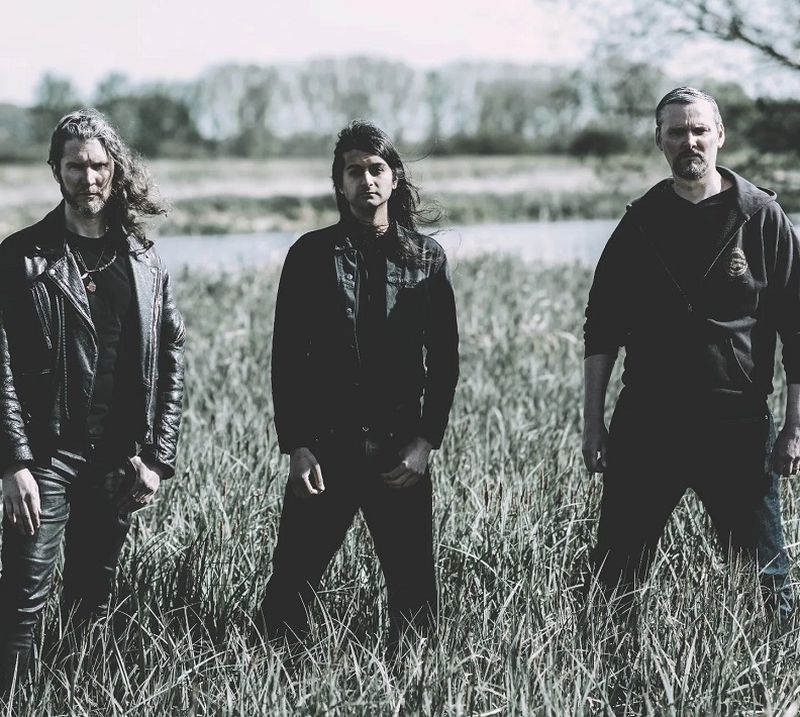
Another feature that deserves attention, is the stable line-up of the band with your brother Adam and drummer J.G. The fact that you know each other so long, seems to be important for Fen, making this development of the band together, isn’t it?
The lineup does feel nicely settled now, that is true. Obviously myself and Grungyn have been doing this for decades so our connection goes without saying – as for JG, he has been in the band for nearly six years now and we’ve been through a lot together so he’s absolutely on board with where we are and where we are going. Add to that, I’d known him for several years before then and it’s clear there’s a real bond between us. He is absolutely part of the brotherhood and that’s important. For a band like ours, it’s essential there’s that unspoken, organic communication where we’re all on the same page, both musically and in terms of outlook. We’ve had some challenges in our time – what band doesn’t? – and some slow periods but here on the eve of our eighth album being released, it feels like we’re in our strongest phase yet. We can’t wait to properly showcase the songs from the new album live and the compositional process is flowing with abundance – Elemental Part 2 is pretty much written and is being rehearsed intensely alongside the live sets we are preparing for later this year/early 2027. We’re even looking ahead to the album BEYOND that…
So yes, the three of us are all full of passion and commitment to this thing we have created, even though we’re twenty years deep into it now!
The production is also amazing this time, sprinkling fresh in the thoughtful passages and all the way in the black metal parts. Can you tell about the recording process?
Thanks for saying so and we are also very pleased with how this one turned out, it really met the goals we’d set for how we wanted it to sound. We actually went back to our good friend Chris Fielding again for this record as he produced the last two we did. This time however we had quite a set approach for how we wanted to go about this one – that is, we wanted to record it live as much as possible. Certainly, for the drums/bass/rhythm guitar, we were determined to go old-school on this – have the three of us set up as if we were in rehearsal, mic everything up and hit record! It presents so many more challenges than just people recording one at a time with click tracks (mic bleed, clean breaks, editing, punching in) as well as really putting the pressure on the whole band to perform. It also puts more pressure on the producer/engineer as they can’t simply synch up a dodgy take to a click!
That said and done though, it lends the material a unique feel – an intangible realness, an organic pulse that cannot be manufactured. We used to record like this back in the day and it’s certainly something that we will return to for the foreseeable future. It helps that Chris is now operating out of new premises at Penylan studios which has a nice atmospheric live room where we can get everything set up, mic’d up and then blast out through the material! Of course, there are plenty of layers/overdubs over this live bedrock – there has to be, double-tracked rhythm guitars, textures, multiple vocals – but the rhythmic foundation of the album is live. Thankfully, the preparation I referred to earlier paid off. We knew exactly where the vocal layers/harmonies were needed, where each FX-laden guitar texture was needed, all of it. It made for a very efficient recording process indeed (which was necessary as we really didn’t have a lot of time overall!).
It’s all added up to one of our most complete sounding albums – big and expansive, heavy and yet airy, layered but not overly dense. It’s all capped off with a superb mastering job from the legendary Jaime Gomez Arellano – the icing on the sonic cake.
There will be a special edition with some extra songs. These are covers. Can you tell a bit more about your affinity with the artists of the cover songs?
Most of them are covers apart from one piece which is an ambient/acoustic reworking of ‘The Gibbet Elms’ from our second album ‘Epoch’ (which I suppose you could argue is also a cover, even if we’re covering ourselves!). The rest really reflect a disparate source of influences whilst also presenting some considerable – but enjoyable – creative challenges. We’ve never released any covers before so again, this was us looking to do something new, to push us into a different space and move out of our comfort zone a touch. We also didn’t want to do anything too obvious and cover something that was too ‘direct’ a source of inspiration. We wanted to tackle songs/pieces that we enjoyed but that perhaps could be considered a more left-field choices.
Covering The Cure is obviously a bold move – a MASSIVELY respected band and as far as I am aware, Robert Smith doesn’t have a lot of time for metal! However, both myself and Grungyn are huge fans so we really did want to try and pay tribute by tackling a piece from their classic ‘Disintegration’ album which we both felt really channelled the bleakness of that record. We have added our own twist to it and recruited a good friend of ours to play violin for the central refrain. It’s a bit different but we think it works, hopefully others will feel the same! The Crosby/Stills/Nash track was one I pushed for – the original is a hazy, woozy song replete with lots of layered close-harmony vocals and soulful leads. Again, it was really to showcase another side to where we have drawn inspiration from.
And finally, W.A.S.P – I mean, what more is there to say? One of our favourite all-time 80s bands and one that invariably hits the stereo when we’re on tour or out drinking. Just absolutely no-compromise rampaging rock/metal. Not the most intricate, granted – but it’s about the attitude, the swagger, the massive chorus hooks, Blackie’s awesome vocals, Holmes’s ‘demented metal blues man’ guitar. We played it pretty straight on this one – I guess some folk might be a bit taken aback at a band like us covering W.A.S.P. but for those who REALLY know us, it shouldn’t come as that much of a surprise!
Which bands/musicians had a huge influence on you when you started to discover music? Is that an ongoing discovery for you with new bands or do you prefer to remain with the ‘older’ bands?
It has definitely been a long and intriguing journey but few things come close to those first couple of teenage years when one initially plunges into the bountiful well of heavy metal and just continues to submerge oneself in this stuff. For me, it was larger-than-life classic acts from the eighties that really captured my attention to begin with – late 80s Whitesnake was HUGE for me, alongside W.A.S.P., Iron Maiden, Saxon, that sort of thing. And then the inevitable thirst for harder and heavier stuff – ‘Burn My Eyes’-era Machine Head for example, Fear Factory, then on into things like Paradise Lost, My Dying Bride, Opeth and Katatonia before plunging further into death metal – Cannibal Corpse and Immolation being a big deal back then.
Black metal was the game-changer however – my first exposure to it was releases like ‘Vempire’ by Cradle of Filth, Emperor’s ‘In the Nightside Eclipse’, the first Setherial album, the first Dark Funeral record, Ulver’s ‘Bergtatt’, Abigor, Gehenna, Gorgoroth’s ‘Pentagram’, Throne of Ahaz, Immortal, the list goes on – and this almost rewired my brain into new realms of musical understanding. At that time, in the mid-late 90s, with no access to the internet, it was a profound experience. Mysterious artists, shrouded in monochromatic imagery producing music laced in atmosphere and an almost inhuman sense of cold malice and sorrow… I was immediately swept up in this. And I have to say, these earliest encounters are still the bedrock of my musical identify. I still love all of that stuff with a passion and that will never change.
Since then, I have reached out and explored a variety of artists both within and without the metal scene – metal-wise, I’ve been hugely digging into all sorts of old-school metal and hard rock – classic well-known stuff like Manowar and Queensryche but also less well-known acts like Medieval Steel, Crimson Glory, Virgin Steele (one of THE very best in their 90s heyday), Icon, Kick Axe, Riot, all sorts of things. I also keep an eye on the newer acts playing this sort of thing – Crypt Sermon, Eternal Champion, Sumerlands, Sacred Outcry, those kind of acts. I also really enjoy some of the more progressive stoner/post metal bands – Yob, Elder, Cult of Luna, Psychonaut, LLNN, that sort of thing. Black metal – aside from the older classics (and I have to mention Enslaved here, a huge and important band) – Ascension, Deathspell Omega, Nightbringer, Darkspace are all more recent acts I enjoy (despite admittedly grim views from one or two of the characters involved in these outfits).
If I’m honest, we take as much inspiration from non-metal acts as we do from metal bands – Fields of the Nephilim are a HUGE deal for me, one of the all-time greats and a massive influence on Fen. Other guitarwave bands from that era are important as well – The Chameleons and The Sound being very important. A lot of shoegaze is important – Slowdive of course but also the first Verve album, Ride and several others. Classic prog also – Yes, Rush, Camel, King Crimson, all acts which have filtered through into our musical outlook. Electronic music is key also – Boards of Canada, Black Dog Productions, Global Communication, Autechre and Bicep to name a few.
In terms of individual musicians, my all time guitar hero is John Sykes – huge tone, incredible feel/playing and one hell of a vocalist also! Chris Holmes from classic-era W.A.S.P. as well – just pure attitude. More recently, I’d say Mike Schiedt from Yob is someone I hugely admire – he’s simply an incredible artist. Nick DeSalvo from Elder is in a similar space I feel – both of these guys you can tell are just utterly immersed in music, totally driven by a singular need to create and express. No artifice, no posery, zero bullshit. It’s both humbling and inspirational to witness.
This year Fen is celebrating its 20th anniversary! We already got a nice present in the form of a new album, but are there still other plans to celebrate this as a band?
Not really! We did discuss this towards the end of last year – should we organise a big gig to celebrate our 20th year, make a big deal of it? In some ways, this is something that we were enthusiastic about – it would have been a good opportunity to really dig into our back catalogue, celebrate the band and showcase ourselves. But – twenty years is a LONG time. Do we want to draw too much attention to that? If the show isn’t a success or is at a fairly small venue that we’re still struggling to fill, does it actually become rather sad and work against us? Are we in danger of leaning in to being a ‘legacy’ act of sorts? These things were certainly a worry for me, particularly during this period of creative fecundity whereby whilst digging into our roots, we were really looking to the future.
So in the end, we decided to quietly shelve those plans and focus on looking ahead. A new album that is part of our most ambitious project to date we feel is a good way to celebrate not only the two decades we have been an active band but also that we still have a lot more to give and a lot more to say. Unveiling our most ambitious project to date I feel certainly underlines that we have no intention of retreating into the world of the ‘legacy’ band before quietly fading away!
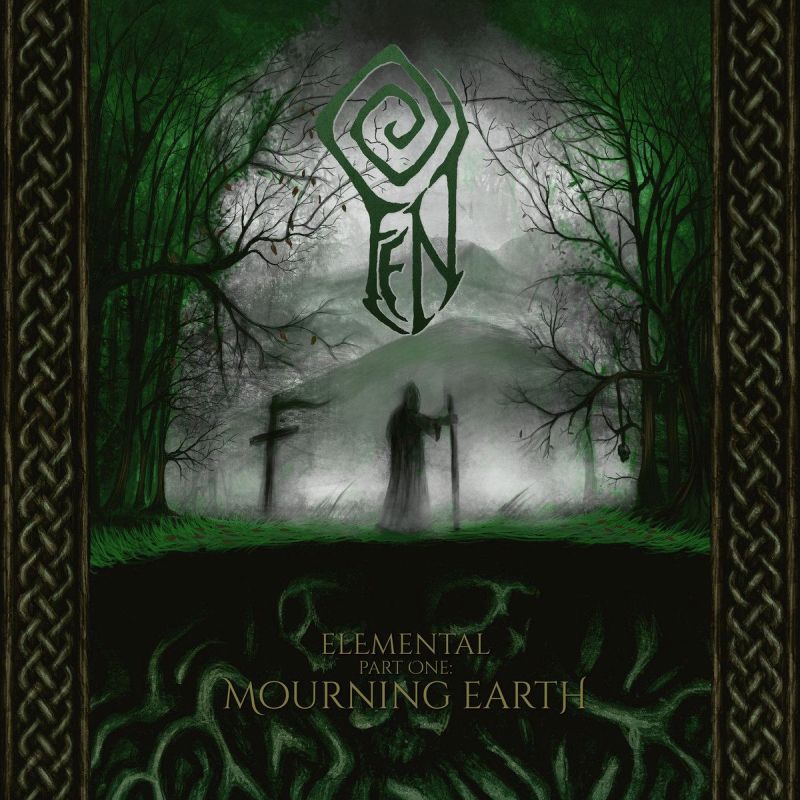
The artwork is done by your brother Adam and it has green as main colour in it. Can you tell a bit more about that symbolism?
Green was an interesting choice and one that he suggested fairly early on in the creative process. It’s not a colour we’ve explored before and one might opine that brown might be more appropriate for an ‘earthy’ concept. Nevertheless, that felt a touch too obvious – and in many ways, given the swampy, peaty nature of the fens and the fact that ‘Elemental – Part 2’ will be a water-based sequel, greeny-black hues actually made a huge amount of sense. The artwork reflects all of the concepts addressed within the album itself – from the depths of the dank, root-laden soil to the barren summit of the lonely mountain peak.
How do you look back at the tours with Negura Bunget, Wodensthrone and Agalloch? And what about your memories on playing at some huge festivals?
We never actually toured with Wodensthrone and only played a handful of shows with them – however, the first gig we played with both them and Negura Bunget in Sunderand way back in 2007 definitely felt like a watershed moment. It was our second ever gig and it was an odd feeling – I was so used to being ‘local support’ in our prior band, the ‘tolerated’ act that’s there only to lend everyone their drumkit/amps, gets 25 minutes as soon as the doors open (and so play to about six people), gets paid nothing and then packs all their gear down afterwards whilst the cool headliners head off to party. That really was the fate of most UK acts back then – derided by their peers and being used mainly to provide gear to overseas heroes. Suddenly, at the Negura gig, people were genuinely interested in what we were doing. There was real intrigue – no sneering, no dismissal, folk coming up to us afterwards to talk with genuine enthusiasm and excitement about we and Wodensthrone were doing. It was something we had NEVER encountered before and it did feel as if something was changing in the UK scene, that something was in the air.
As a result of that show, we also became friends with Negura Bunget and played with them a few times before going on a small tour in 2010 of Ireland and Europe. That was good fun – quite ramshackle, the organisation was not the best and some of the gigs were a bit shaky. We learned a lot though, both about ourselves and the touring/’band business’ world. Agalloch was another story altogether. We first played with them in 2008 when they invited us out of the blue to support them in Belgium – we weren’t a prolific live band back then and indeed, I think this was the next show we played after the Negura show in 2007 (so our third ever gig!). This again was an eye-opener – a proper, main support slot at the legendary Biebob venue with people who seemed genuinely excited to see us. It was an incredible night and we became fast friends with those guys.
So fast forward to 2013 and we’re on a nightliner with them for a month. Four weeks on a bus with good friends, playing music you love each night and then drinking into the early hours whilst nerding out about various obscure metal bands. It doesn’t get any better really does it? A few of the shows were a bit challenging but by and large, it was an incredible experience. Moments of utter hilarity, moments of real creative satisfaction and audience connection, moments that will live on in the memories for ever.
As for ‘huge’ festivals, we’re yet to play a lot of the more well-known mega-fests (Hellfest, Wacken, Brutal Assault et al). We did play at Alcatraz in Belgium a couple of years ago which was cool, as was Steel Warriors Rebellion in Portugal back in 2013. We’ve also played Damnation here in the UK a few times which is always a good one for us. One that really stands out though is playing a very early edition of Houses of the Holy in Austria many years back – indeed, we headlined it. It was a much smaller affair then – maybe 100 people at most in attendance – but this just made it all the more special. The sense of camaraderie, the unique setting, the immensity of the landscape, all of this combined to produce a deeply spiritual experience. We really felt a connection with the people and place there, united in love for music against the backdrop of the alpine mountains with true comrades. The torchlit nighttime procession to light the beacon fire as we played is something I’ll never forget!
What are the plans for the near future, also about playing gigs?
Nothing concrete as yet, however we are looking to arrange a short headlining UK tour towards the end of this year in order to promote the newest record. We haven’t done any headlining UK club shows in a few years so this would be a great opportunity to showcase ‘Mourning Earth’ in a live setting with a nice long set. Other than this, attention turns mainly to two things – getting shows arranged for 2027 to continue showcasing the new album (a few discussions on these are underway currently) and getting Elemental Part 2 recorded. We’re hoping to enter the studio in the Spring next year, we really want to capture this momentum and harness the creative energy currently flowing through the band.
Are there any plans with Fellwarden?
Yes indeed. Two years on from our debut show at Fortress Festival, we are returning to the live arena for a short run of dates supporting the excellent A Forest of Stars. We will start rehearsing for that soon. In addition to that, a lot of material has been written for a fourth album – we’ve been working on that a little more as a band and as soon as the AFoS tour is concluded can really focus on that. Hopefully, we’ll be able to start recording in early 2027 – so it looks like next year might be a busy one in the studio for me! Again, the creativity here is flowing so it makes sense to capture that.
If there is anything you would like to add, please feel free to do so… J
Twenty years done – feels like the blink of an eye. With the energy and inspiration we currently have, I’d like to think there are twenty more still to come! I hope your readers find something to connect with in ‘Mourning Earth’ and if they do, watch this space – as the sequel will not be far behind…
That’s amazing for us! Thank you very much for this interview!
Social media